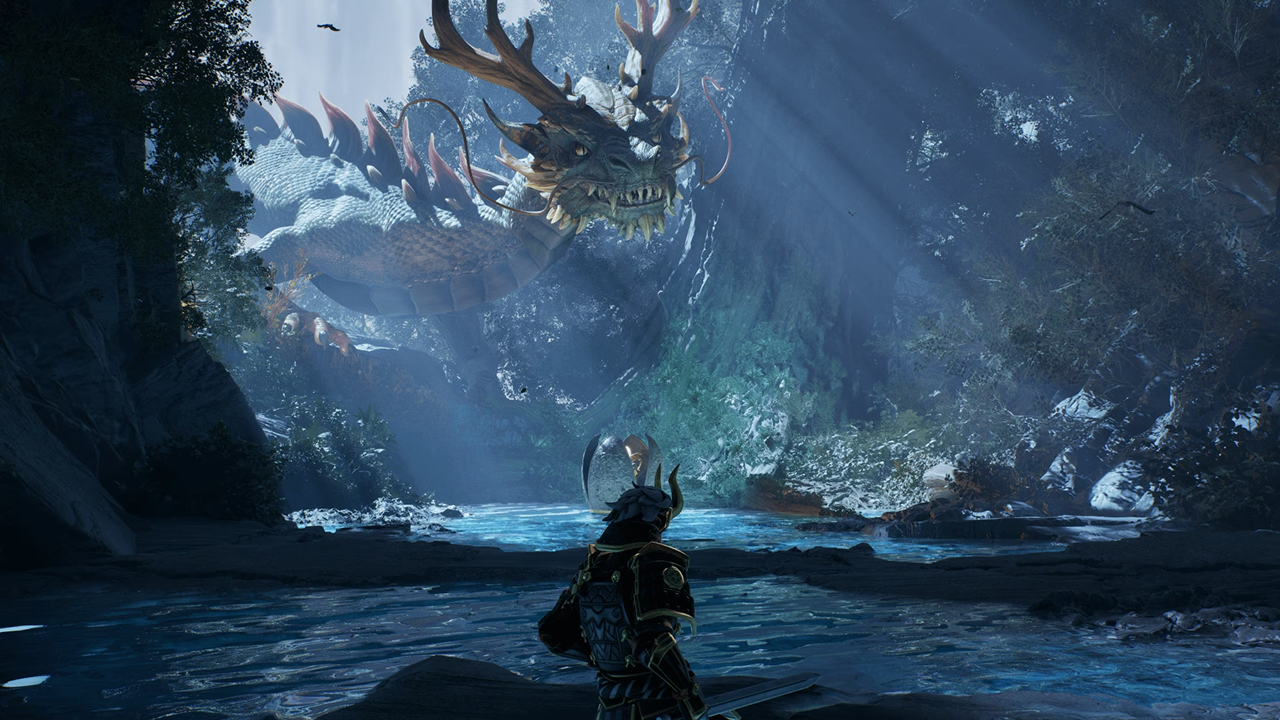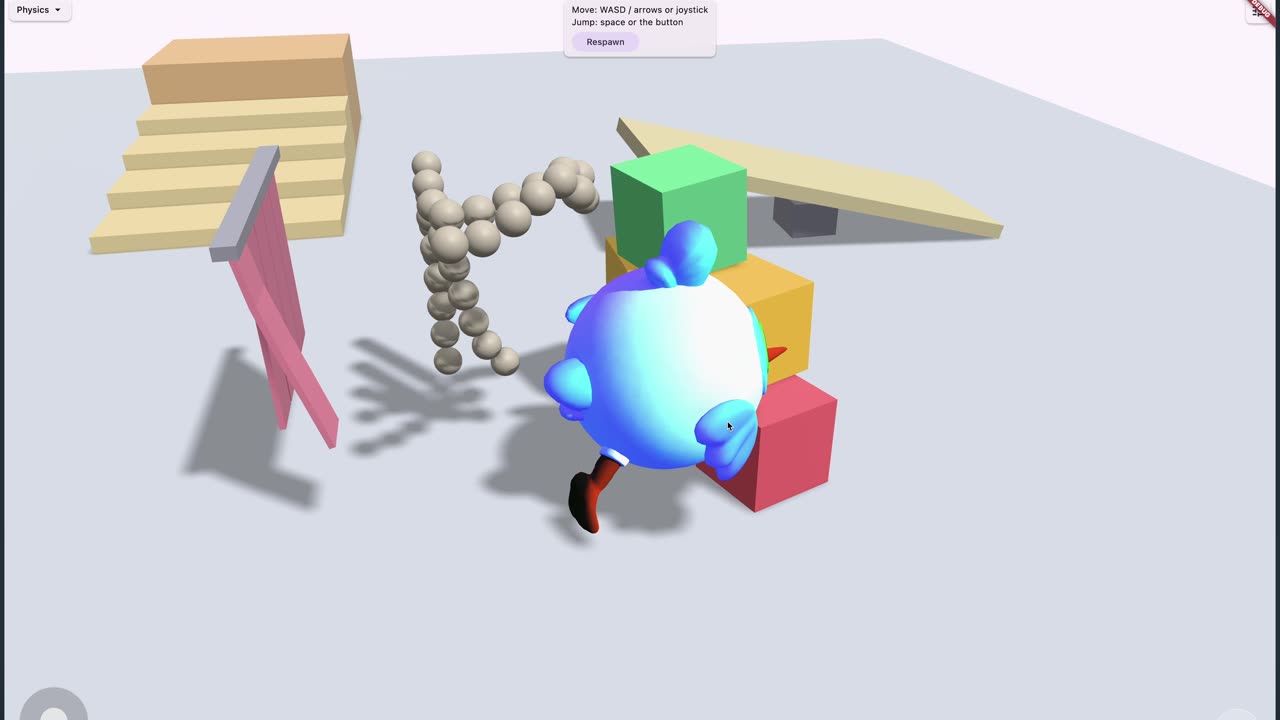

Unity has officially announced a brand-new game engine: Unity Spark. While it is technically built on the foundation of the existing Unity engine, it is aggressively positioned as a completely separate product tailored for an entirely different audience. The announcement is incredibly fresh, and the platform isn’t even fully open to the public yet. Since the use of AI in game development is currently the most fiercely debated topic in the industry, it is already obvious that this heavily AI-driven engine is going to be highly polarizing. I remember seeing a similar backlash when visual scripting first went mainstream, but this feels like an entirely different beast.
What is Unity Spark?
Unity Spark is not meant to replace the standard Unity engine. It exists within its own isolated ecosystem as a distinct product. While the team might backport some of Spark’s new tech into mainline Unity in the future, it operates completely independently for now.
Standout features:
- Collaborative development: You can build a game simultaneously with someone else over the internet.
- AI-driven creation: The development process is heavily driven by prompts and assets. For example, if you want to spawn a drone or change the environment, you just type it into a chat-based interface.
- Editor access: Once you establish the core of your game using the chat interface, you can dive into a traditional editor to manually tweak the lighting, adjust deep settings, and upload your own custom assets.
- Browser-based execution: The entire engine currently runs directly in your web browser. I initially doubted how well a browser could handle a game engine, but the performance was surprisingly smooth during my brief test.
The Unity logic running behind the scenes
If you peel back that highly accessible chat layer, you will find an architecture that looks remarkably similar to standard Unity:
- An Inspector panel and scene settings
- A traditional scene graph
- A dedicated scripting layer
- A visual programming interface and a shader graph
In short, serious development tools are hiding right behind that friendly AI chat interface. You can tweak and reuse your results just like you would in a traditional game engine, with the massive addition of AI-assisted collaboration. Whether Unity will eventually push its primary editor entirely into the browser remains to be seen.
Asset sourcing: The assets shown in the launch footage were not generated by AI. They were all free, pre-existing assets pulled directly from the Unity Asset Store. You also have full freedom to upload your own custom assets.
Making games still takes time
Do not expect to generate a massive game instantly. Some of the demo games shown during the reveal took several weeks to build. You aren’t going to spit out a flawless masterpiece in two weeks, but Spark is clearly aiming to capture a very different demographic.
Many developers are already predicting that this approach will turn the platform into a massive factory for garbage games, and they might be right. Furthermore, games built in Unity Spark cannot currently be exported to standard Unity. They might add a feature to export a Spark project into mainline Unity later, but right now, Spark is completely cordoned off.
What is Google Playground?
Right alongside Spark, Google Labs announced the Playground project. Playground provides the infrastructure to build and host games entirely online. This is where Unity Spark steps in: Playground provides the AI frontend for game creation and the hosting environment for the final products.
According to Google’s announcement, Playground is an experimental platform designed to violently lower the barrier to entry for game development. It allows you to bring game ideas to life using just a few text prompts, completely bypassing the need for programming experience.
- Conversational interface: You literally guide the game’s creation by typing out what you want. You can start with a blank canvas, rewrite your initial prompts, or use guided support to flesh out your concept.
- Easy editing: If you want to tweak gravity, rewrite core rules, customize characters, or drastically alter environments, you just ask the AI to do it.
- Cross-device playability: Because it is completely browser-based, you can play these games seamlessly on a laptop or a phone.
- Sharing options: You can lock your game down privately, send a shareable link to your friends, or publish it directly to the public Playground Explore gallery.
- Social features: Certain genres support built-in leaderboards and multiplayer. You can claim a unique handle for your gaming profile, like games, compete for high scores, and follow your favorite creators.
- Gallery: The platform relies heavily on player ratings and activity to push the most creative and fun games to the top of the pile.
How does Unity Spark integrate?
For highly dedicated creators, Playground will soon roll out deep Unity Spark integration. Spark unlocks professional-grade mechanics, high-fidelity 3D capabilities, and the raw flexibility of the Unity runtime. The overarching goal is to build an ecosystem where you can start with a simple text prompt and eventually transition into building highly immersive experiences. To be crystal clear, they are talking strictly about Unity Spark here, not standard Unity.
Unity Spark is currently sitting in a closed beta, with a broader beta launching very soon. You can test the demo over at playground.google and dive into the hardcore details at [unity.com/spark](https://unity.com/spark).
Pricing and monetization model
- Playing catalog games on Playground is completely free. These are games built and published by other creators.
- To actually build games, there is a free tier that gives you a limited number of tokens, which refresh weekly. I burned through my free tokens in about an hour just experimenting, so keep an eye on your usage.
- If you need a higher token limit, you have to subscribe directly to a Google AI plan.
- They haven’t announced any monetization features for creators yet, meaning you cannot make money off your games right now. The product is strictly for hobbyists at this stage.
Why was Unity Spark developed?
Matt Bromberg, the President and CEO of Unity, released a statement breaking down exactly why they built Unity Spark. Here are the core takeaways:
- Spark, built in partnership with Google, is a new pipeline that allows people to gather and build games collaboratively right in the browser. You don’t need any prior experience with Unity or game development.
- Simply asking an AI to spit out a finished game in one shot does not make you Hideo Kojima. It is exactly like asking a word processor to rewrite the first paragraph of War and Peace—it doesn’t instantly make you Tolstoy.
- Spark was explicitly engineered to help people craft genuinely original interactive experiences that are actually worth playing, refining, and sharing.
- Spark hooks directly into the Unity Asset Store, allowing users to build games using thousands of high-quality assets crafted by professional community artists.
- Target audience: Hardcore gamers who have dumped thousands of hours into a specific genre and know exactly what is missing, artists who cannot code but desperately want to bring their vision to life, and modders looking to build something entirely fresh.
- They hope some users will eventually transition into industry professionals, and that current professionals might use Spark as a rapid prototyping tool for new ideas.
- Attempting to build a real game will massively increase the public’s respect for the developers who pour their lives into the art and craft of game making. Even a simple interactive experience requires serious skills in narrative design, graphics, audio, UI, level design, systems design, and scripting.
- Roughly three billion people play a game made with Unity every single month, yet almost none of them have ever actually built a game. Video games remain the last massive form of entertainment that almost everyone consumes but practically nobody creates.
- Democratizing game development is Unity’s founding mission, and Spark was built entirely in that spirit.
What can you build with Spark?
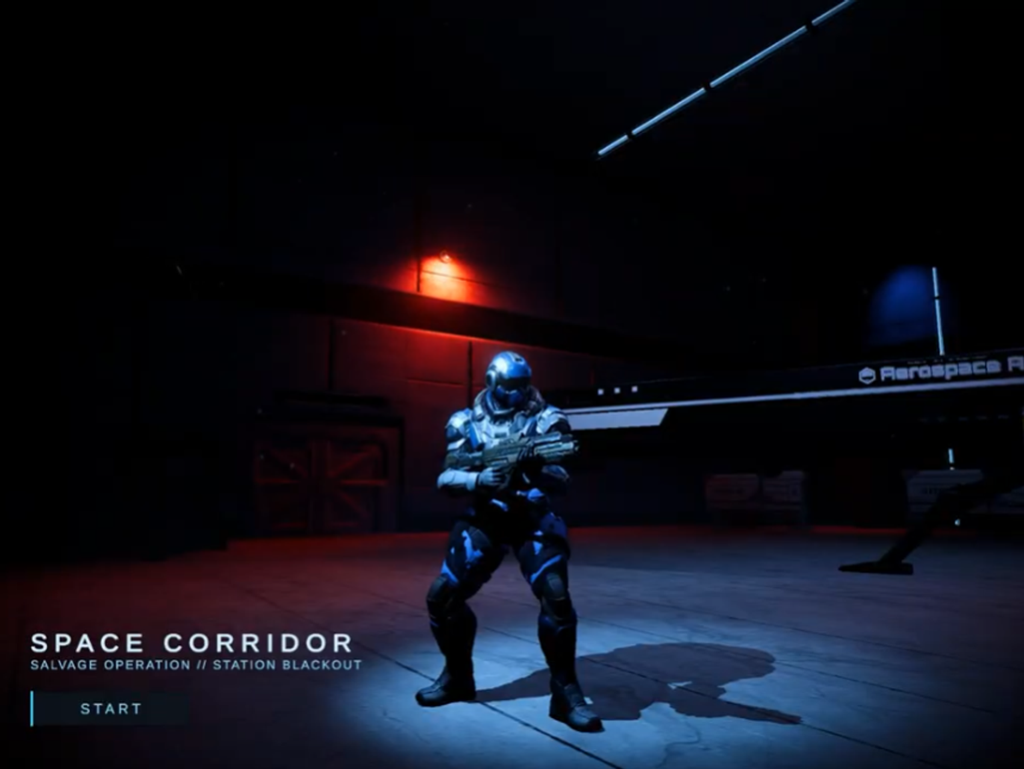
Unity provided several working demos to showcase exactly what kinds of games you can build with Spark. I tried out the Space Corridor demo. In this game, you fire up a generator and have to survive for 90 seconds while fighting off waves of aggressive drones. Fun fact: the Escape key was completely broken and wouldn’t let me exit the game; I had to smash the Tab key to finally break out of it.
Other provided examples included:
- A horror game
- An RPG-style adventure
- A robot racing game
Another massive detail to note is that Unity Spark can technically run entirely outside of Google Playground. This means that if Google inevitably kills the Playground project—as they do with many experiments—Spark could still survive and be utilized in other ways. The deep technical details regarding exactly how persistence and core game logic function are still largely unknown.
What you need to watch out for?
- Google’s track record: Google is notorious for launching highly ambitious projects and quietly abandoning them a year later. Playground is currently labeled as an “experiment,” so betting your entire workflow on it surviving long-term is highly risky.
- Simulated screenshots: Several of the images used in the official announcement were clearly simulated. You should approach anything that looks a little too perfect with heavy skepticism.
- Rough launch: When I tried to boot up a game on Playground, the platform threw multiple connection errors. It was definitely not the smoothest launch Google has ever executed.
- Product positioning: Spark is not a competitor to standard Unity. You need to view it as an entirely separate engine targeting a radically different demographic—almost like an experimental sub-division of Unity.
Conclusion
Spark looks like a genuinely interesting product, while Playground leaves me feeling a bit more skeptical. Ultimately, Spark’s trajectory will be decided entirely by what the community does with it. Will it evolve into a highly respected development tool, or will it fade into obscurity?
This launch raises some massive questions for the future of the industry:
- In the future, will the core skeleton of our games be established through collaborative, chat-based prototyping?
- Or will the industry violently reject anything tied to AI generation?
AI is a highly polarizing topic right now. However, if you are a veteran Unity developer, you can at least find comfort in the fact that this is entirely cordoned off from the mainline Unity engine you rely on daily.