

PopCap was the absolute giant of the casual gaming world from the early 2000s through the 2010s, winning over every type of player imaginable. Alongside undisputed masterpieces like Bejeweled, Zuma, Peggle, and Plants vs. Zombies, there is a massive catalog of classic games that rarely get talked about anymore. In this post, I will dive deep into 21 classic PopCap games, evaluating and ranking them against each other to see which ones hold up today.
The origin story of PopCap
PopCap was founded in 2000 by John Vechey, Brian Fiete, and Jason Kapalka under the wild name Sexy Action Cool. The only game they ever produced under that banner was Foxy Poker. This game is now considered lost media with no public download links available, so it cannot be officially ranked.
According to a GDC presentation by the founders, the game totally flopped. Foxy Poker was just meant to be a quick, dirty cash grab to fund their real projects. However, they quickly learned that you cannot do “half-baked smut” in the adult software industry—the game didn’t feature any actual nudity. Realizing their mistake, they pivoted, changed the company name to PopCap, and started working on their first real game.
PopCap classic games review and ranking
Bejeweled (2001)
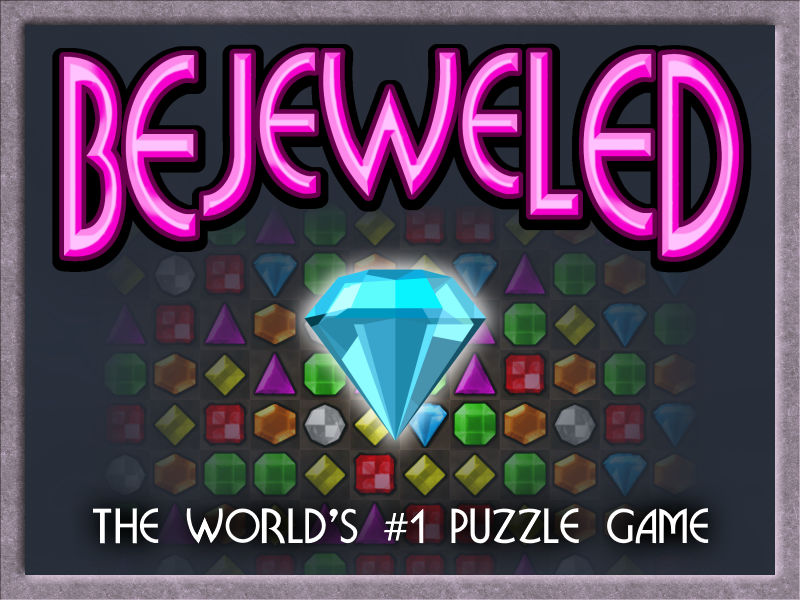
Originally launched as a simple Java web game named Diamond Mine in November 2000, the core idea borrowed heavily from a 1999 Javascript game called Colors Game. The developers loved the gameplay but hated the lack of visual flair, sound effects, animations, and the clunky coding. They used that concept as the foundation for their first official PopCap release, which was packaged as Bejeweled Deluxe and hit retail shelves on May 30, 2001.
Gameplay: You swap gems on the screen to match three or more in a row, clearing them from the board. Modes:
- Classic mode: You play until you run out of moves. The difficulty is incredibly low.
- Time Trial mode: This is where the real stress kicks in. You have to match gems as a timer rapidly drains. Matches add time back to the clock, and filling the bar pushes you to the next level. This single mechanic turns a casual mode into an insanely addictive experience.
Despite its bare-bones presentation, the game is still surprisingly fun. I didn’t play this as a kid, but its chunky resolution and unpolished aesthetic give it a unique retro charm. I probably won’t revisit it as often as the sequels, but it stands on its own as an incredibly solid debut. It reminds me of the pilot episode of a classic show like South Park—cool to see where the magic started, but you probably won’t rewatch it constantly. Since it has no competition yet, it takes the top spot.
Legacy: Bejeweled was ported to 12 different platforms: Flash, Windows, Mac OS, Blackberry PDA, Palm OS, Windows Mobile, Xbox, iOS Safari, Java phones, click-wheel iPods, and even a Jakks Pacific plug-and-play device. It spawned seven sequels and secured a spot in the video game hall of fame.
Alchemy (2001)
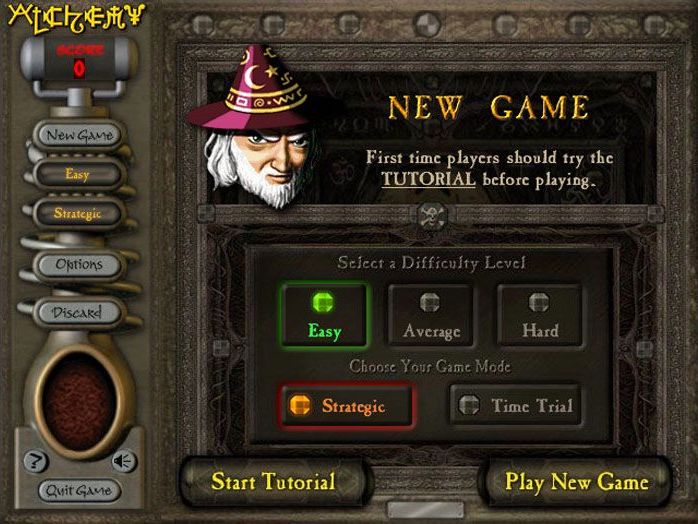
Released on August 29, 2001, Alchemy dropped about three months after Bejeweled Deluxe. It also started the PopCap tradition of greeting the player right when the game boots up.
Gameplay: You are handed alchemical runes one by one, and you have to place them on a grid. A rune can only be placed next to one that shares either its color or its symbol. If you try to squeeze a rune between two existing ones, it must match both constraints. At first glance, it looks like mindless clicking, but there is some real strategic depth here.
The good:
- It made me think way more than I expected and kept me glued to the screen for a solid stretch. This is a hallmark of the best PopCap games.
- The presentation is a massive step up from Bejeweled, featuring a full main menu and multiple difficulty settings.
- It drips with old-school charm: broken visuals, bit-crushed sound effects, and that classic 640×480 resolution.
The bad: It completely lacks the instant pick-up-and-play simplicity of Bejeweled. You actually have to read the instructions and fail a few times to understand the mechanics. Because of that learning curve, I am placing it below Bejeweled. I totally understand why we live in a timeline where Bejeweled got 12 ports and Alchemy didn’t even get one sequel. At least you can still buy it on digital storefronts today.
Seven Seas
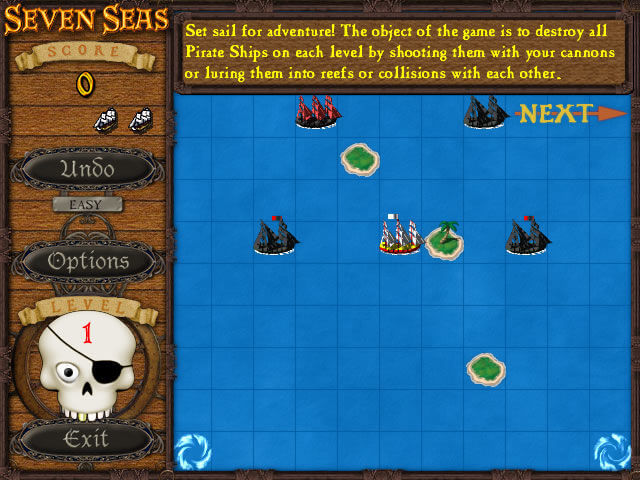
This is a weird but highly creative game. You control a small ship in the middle of the screen, and pirate ships constantly plot direct courses to sink you. Your goal is to destroy them either by firing your broadside cannons or tricking them into crashing into islands and shipwrecks.
Where it shines:
- Simple but brilliant AI: Standard ships will always take the shortest possible route straight toward you. Is there an island in the way? They will crash right into it. Is your cannonball flying straight into their path? They don’t care. Using their absolute stupidity against them is incredibly fun.
- Different enemy types: Red ships are slightly smarter and will actually avoid obstacles. You have to hunt them down with your cannons and dive into whirlpools to escape tight spots.
- The tiny dragon: There is a cute little dragon on the screen, which is extremely important to me.
The bad: The music is awful. Unlike Bejeweled’s decent, rhythmic soundtrack, Seven Seas loops a ten-second MIDI sea shanty that gets annoying fast.
I died constantly during my first five minutes, but once the logic clicked, I couldn’t put it down. I struggled to choose between this and Bejeweled. Bejeweled is the timeless classic, but Seven Seas has much smarter programming and design. I’m placing it just below Bejeweled out of respect for the icon, but this little game has a permanent spot near the top of my list.
Dynomite
Not one of my favorites. You shoot eggs toward the top of the screen to match three or more and drop them. It is essentially Bust-A-Move with dinosaurs. There are power-ups and a bird that makes one of the best sound effects in gaming history (“Duhh… Whirley’s comin’!”). If you don’t shoot that bird down fast, it dumps a brand new egg color onto the board.
The issues:
- It features tons of modes, but nothing really clicked for me.
- The play area is tight, the egg hitboxes feel massive, and the screen is cramped. It was built for 4:3 monitors, but the technical execution just feels messy.
- It is significantly more fun to watch than to play. The explosions and funny sounds are great, but the actual gameplay just felt stressful.
I am dropping this below Alchemy. It has charm and content, but zero replay value for me.
Mummy Maze
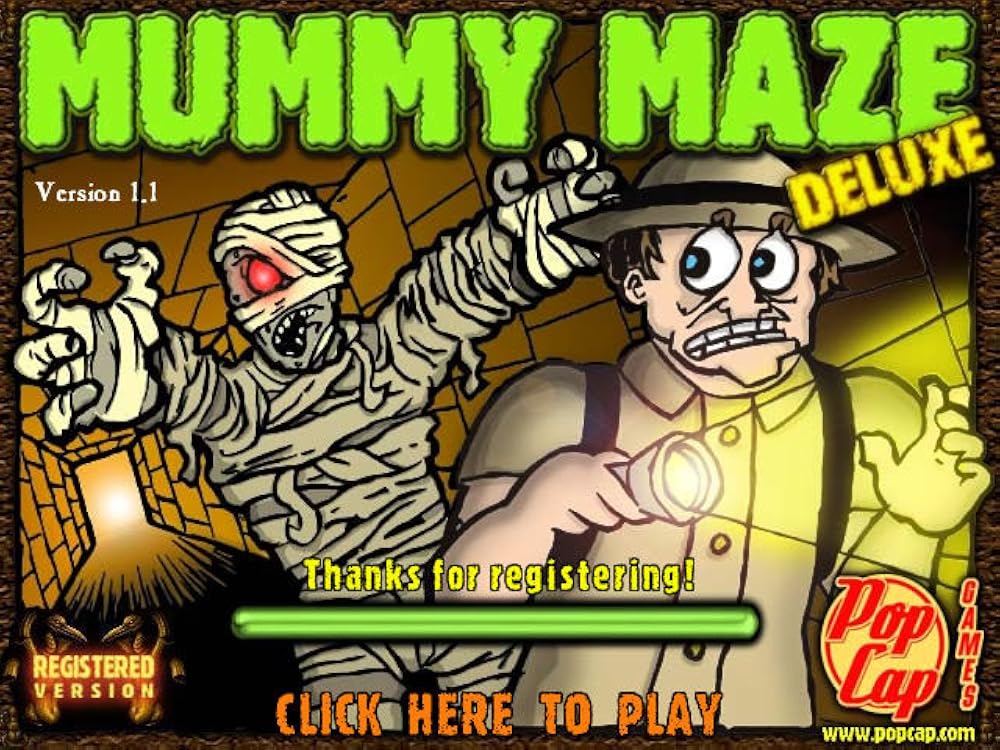
I absolutely love this one. Your goal is to get from point A to point B while escaping a mummy that relentlessly chases you. The catch: for every single step you take, the mummy takes two. You have to figure out how to trap it behind walls to survive.
It uses the same brilliant “exploitable simple AI” design that hooked me in Seven Seas. The mummy paths directly toward you, so you can easily bait it into getting stuck in corners. It is not incredibly deep, but I had a blast playing it. It goes right above Dynomite.
Noah’s Ark
You find matching pairs of animals to clear the board and boost your score. It is completely harmless.
- There is a mode where you click connected symbols to drop them before the screen fills up.
- There is also a Bejeweled-style mode that works fine.
It is a completely inoffensive game with nothing much to say. It lands just above Dynomite.
Atomica
Now this is a fantastic game dripping with that specific early-era PopCap charm: goofy artwork, great sound design, and incredibly engaging gameplay.
Gameplay: You move atoms around to form 2×2 squares (or larger) to clear the board. Every time you make a move without scoring a match, more atoms spawn. It sounds simple, but you get overwhelmed very quickly and have to set up massive chain reactions just to keep the board clean.
“Charm” is the only word for this. It goes straight to the very top of the list as the best game so far.
Big Money (2002)
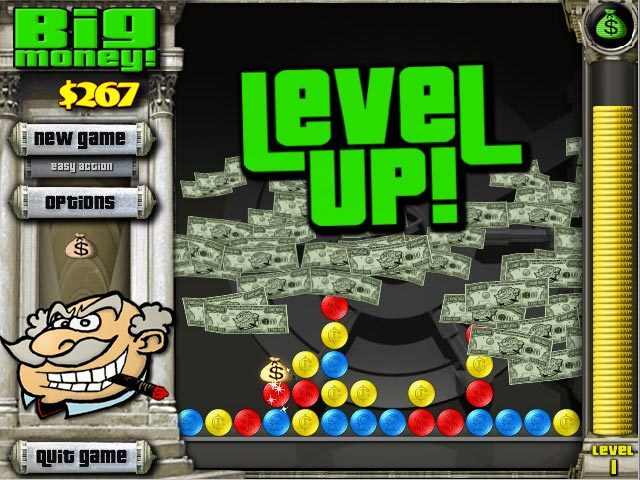
PopCap’s seventh retail game dropped on June 4, 2002, and it is an absolute standout.
Gameplay: You click groups of three or more matching coins to clear them, while new coins constantly push up from the bottom. Your goal is to fill a meter, drop a money bag, and collect enough bags to advance.
Why it rocks:
- The animations, the frantic clicking, and the announcer yelling “Big Money!” during fast combos hooked me instantly. It completely nails that early 2000s PopCap vibe.
- The visuals are simple, but having a guy smoking a massive cigar and making weird faces on the side of the screen gives it so much personality.
- The sound design is incredibly satisfying; the pitch gets higher as you collect coins faster.
- It has a great sarcastic sense of humor. When you finish a level, you get ranked as a “minimum wage slave” or a “fry cook.” It is not exactly an anti-capitalist masterpiece, but it definitely captures the cynicism of working a terrible retail job.
This might be my current favorite. Bejeweled is iconic, but Big Money is just vastly more fun to actually play. It dethrones Atomica for the number one spot.
Typer Shark
It is just a typing game. Sharks swim toward you, and you type the words stamped on their sides to kill them. Mavis Beacon is a better teaching tool, Mario Teaches Typing has a cute plumber, and this has an Abyss mode. It isn’t bad, just totally uninteresting. I am tossing it below Noah’s Ark.
Rocket Mania
I actively dislike this game. It is a simple pipe-connection puzzle where you link one side of the screen to the other. The gameplay is fine. The problem is the heavy use of racist caricatures. The game features a dragon speaking in a highly stereotypical Chinese accent, and the visuals feel like they are mocking Chinese culture rather than celebrating it. The racism just leaves a terrible taste in my mouth. As the first genuinely bad game I played during this marathon, it goes straight to the absolute bottom of the list.
Zuma
To wash that bad taste away, here comes an absolute titan of the industry. Zuma is flawless.
Gameplay: A line of colored marbles rolls down a track toward a skull. You shoot marbles from a frog idol in the center to match three or more and destroy the line before it reaches the end. It is simple, fast, and intensely addictive.
Cultural note: You could argue the game heavily appropriates Mayan/tribal culture for its aesthetic. However, the Mayans have been gone for a long time, and I am not qualified to debate the cultural impact here. Assuming it gets a pass, I absolutely adore the aesthetic.
There is a reason we all remember Zuma so fondly. However, the genre has evolved significantly since then. For me, the absolute peak of this specific genre is an indie game called Sparkle 2—it is much deeper and has incredible gameplay modifiers. Because of that, I am putting Zuma just below Alchemy.
Feeding Frenzy
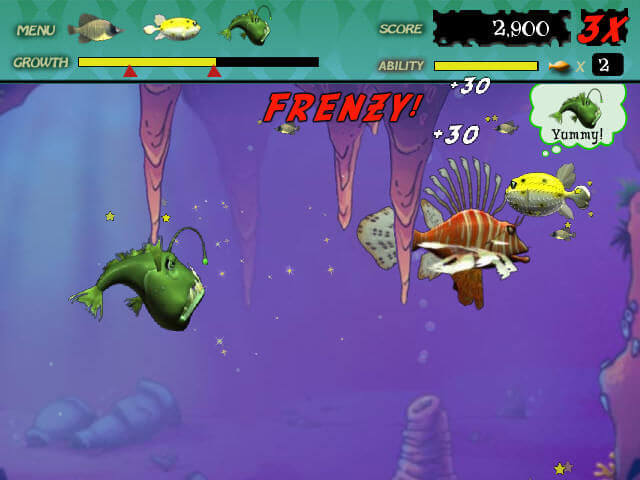
I have a massive soft spot for this, but objectively, it is just okay. You move your mouse to eat smaller fish, grow bigger, and eat even bigger fish. It is ridiculously simple, yet it spans an insane number of levels.
- It plays exactly like agar.io, suffering from the same repetitive loops, just without the multiplayer aspect.
- The goofy sound effects and the inside jokes my friends and I made while playing gave it a special place in my heart.
- It is a great game to just turn your brain off and chill.
I love it, but the heavy repetition prevents it from ranking higher. It sits above Alchemy, but below Zuma.
AstroPop
This game is incredibly boring. You grab blocks from the top and throw them back up to make matches of three. There is zero strategy involved. You cannot build massive, calculated chains like in Big Money, and you cannot rely on lucky cascades like in Bejeweled.
The art style is also highly off-putting. It looks like it was ripped straight out of a cheap “how to draw anime” book, featuring weirdly proportioned characters making uncomfortable faces. I couldn’t look at it for more than a minute. It isn’t as bad as Rocket Mania, but only because it isn’t racist. It sits right above Rocket Mania.
IgglePop
Following AstroPop, this doesn’t offer much relief. It has almost nothing to offer, and I got bored so quickly that I didn’t even bother pushing into the later levels to see if it evolved. I actually confused this with Chuzzle before playing. If this was your childhood game, I am sorry. It goes below Dynomite.
Pixelus
Another strange entry, but not the fun kind of strange. I initially thought it was a Picross clone, but it is actually a bizarre puzzle game where you throw tiles from the edges of the screen to fill empty slots.
- It has more depth than AstroPop.
- But it completely lacks the instant satisfaction of Big Money or the deep strategy of Alchemy.
- The graphics look like cheap clip art.
There is nothing inherently wrong with it, but being “just okay” doesn’t cut it next to the heavy hitters. It sits above Dynomite and below Alchemy.
Insaniquarium
I absolutely love this game. This is the exact kind of crazy energy I wanted from Pixelus. You manage an aquarium full of fish while fending off alien attacks, trying to earn enough cash to buy three pieces of an egg to beat the level. The premise is simple, but the execution is absolute chaos.
- It still holds a massive cult following thanks to its bizarre, deceptive simplicity.
- The sheer variety of fish, upgrades, and alien attackers completely changes the dynamic of almost every level.
It goes above Bejeweled, but below Bookworm Adventures.
Bejeweled 2
The highly anticipated sequel. This is the era where PopCap really started securing a massive mainstream audience.
When I called the first Bejeweled an interesting historical artifact, this is exactly what I meant: Bejeweled 2 is such a complete, perfected experience that there is absolutely zero reason to ever boot up the first game again.
Why it is incredible:
- The visuals are stunning. The beautifully rendered planetary landscapes and mountain ranges create a deeply relaxing atmosphere.
- The gameplay is incredibly smooth. You can finally drag and drop gems instead of just clicking two squares.
- The sheer number of game modes turns it from a five-minute distraction into a massive, standalone experience.
- It adapts to exactly what you want: it can be slow and methodical, or fast and incredibly stressful.
Bejeweled 2 easily takes the number one spot.
A quick note on Sprout Games
In 2005, PopCap acquired Sprout Games, the studio that actually developed Feeding Frenzy. There is almost zero information about this studio online. The only known legacy they left behind is that they worked with PopCap and eventually got absorbed by them.
Pizza Frenzy
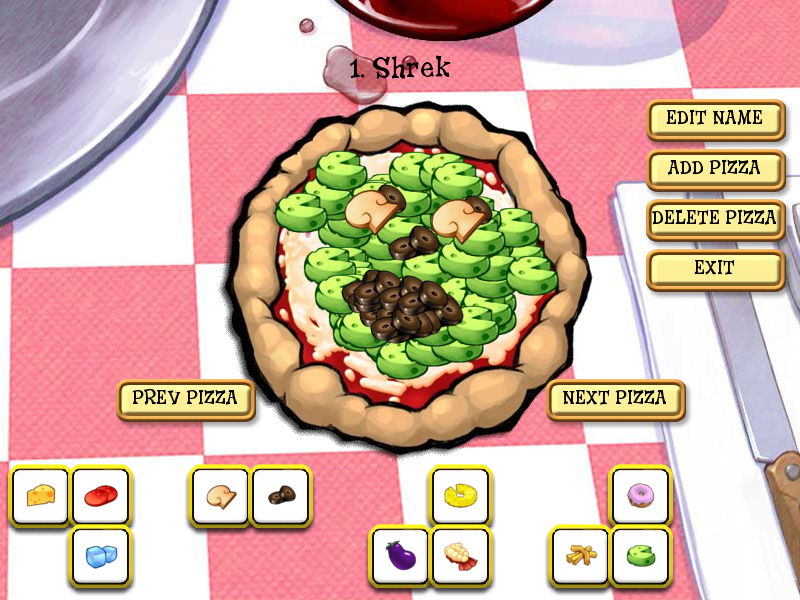
Another game that is essentially nothing. I honestly still don’t fully understand the mechanics. You click on people’s orders, click the corresponding pizza shop, fill a tip jar, and move on.
When my friends and I played this for footage, we were completely baffled by how pointless it felt. It is terrible, but honestly, terrible is sometimes more interesting than boring. It goes below AstroPop but above Rocket Mania. I would rather be frustrated than bored to death.
Heavy Weapon
Now we are talking! This game has a bizarre anti-communist theme and features a portrait of what I think is Lenin right on the intro screen. Despite the completely unhinged framing story, it is a remarkably solid shoot ’em up.
Gameplay:
- You blast endless waves of helicopters and jets trying to bomb you.
- You desperately dodge supply drops from friendly ships.
- You buy upgrades between levels.
I really enjoyed the upgrade system. Instead of single-use screen-clearing bombs, the upgrades permanently alter your main weapon. It is highly addictive. If you like shmups and want a dose of PopCap weirdness, give this a run. It lands just above Feeding Frenzy.
Chuzzle
I have a serious love-hate relationship with this one.
The good:
- It is overwhelmingly cute. The Chuzzles follow your cursor, squeak when they hit walls, and get dizzy if you shake them.
- The soundtrack is phenomenal. This is the exact moment PopCap cemented their legacy for producing incredible game music.
- The giant Chuzzles and locked Chuzzles add some solid difficulty spikes.
The bad:
- It is just another match-3 game, except you slide entire rows or columns instead of swapping single tiles.
- Once the initial “aww” factor wears off, it severely lacks depth and staying power compared to Bejeweled.
- It feels a bit cynical—like they were just trying to cash in on the Bejeweled craze again rather than innovating.
It is well-made and adorable, but I can’t rank it as high as I want to. Ironically, it goes right above the original Bejeweled.
Bonnie’s Bookstore
An absolute fever dream of terrible design. It is ugly, genuinely a bit creepy, and fundamentally unfun. It is everything you expect from Bookworm Adventures, but stripped of all the charm and joy.
Compared to Bookworm: While Bookworm is basically just a word search with a coat of paint, it is vastly more interesting. You are given a specific set of tiles to work with. Bonnie’s Bookstore just dumps a massive grid of letters on the screen and restricts you to adjacent tiles. It is worse in every single way.
Is it worse than Rocket Mania? Honestly, I don’t know. At least it isn’t racist, so it goes right above it. But you are on incredibly thin ice, Bonnie.
Hammer Heads
I thought this was Feeding Frenzy 2, but it turned out to be a digital version of Whack-a-Mole. You click on gnomes. That is literally it. It is even more boring than the real-life arcade game because you don’t even get the physical satisfaction of hitting things. I don’t even want to talk about it anymore. It goes above Pizza Frenzy.
Bookworm Adventures (2006)
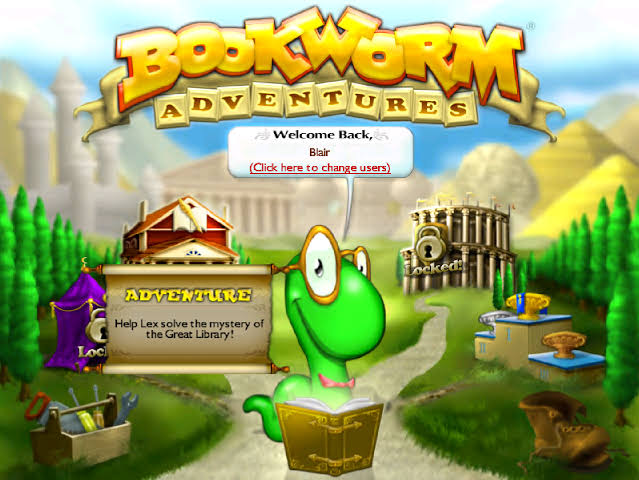
This is a strange beast. It successfully combines standard word-search mechanics with incredibly creative RPG and adventure elements.
Gameplay: You spell words from a grid to deal damage to enemies before they kill you. Along the way, you level up, unlock powerful upgrades, and collect mysterious artifacts to save the princess.
Why it is special:
- The educational aspects are hidden flawlessly behind the combat mechanics.
- The RPG elements keep the core gameplay loop from getting stale.
- The dialogue and humor as you transition between worlds add a massive layer of charm you rarely see in casual word games.
- It is fantastic to play half-distracted while talking with friends, laughing at the jokes, and trying to spell the longest words possible together.
It takes the number two spot, right below Bejeweled 2.
Peggle
This is the one I have been waiting for. An absolute masterpiece and a massive fan favorite.
Gameplay: Heavily inspired by Japanese Pachinko machines, you fire a ball from the top of the screen to clear orange pegs. It is incredibly easy to understand but brutally difficult to master.
Why it dominates:
- Audio: The sound design of the ball bouncing off pegs delivers a massive dopamine hit, perfectly mirroring the addictive nature of Big Money.
- Music: It provides a calm, rhythmic background during normal play, then explodes into a roaring rendition of Beethoven’s Ode to Joy when you hit Extreme Fever. It makes every victory feel triumphant.
- Visual style: The character designs perfectly encapsulate that early 2010s Flash game aesthetic, which triggers massive nostalgia for me.
- Content: 55 campaign levels, 10 playable characters with unique powers, 75 challenge levels, plus Duel and Quick Play modes—all packed into a tiny 18MB executable file.
Peggle is a generational game. I can’t definitively say it is better than Bejeweled 2; my preference shifts depending on the day. But right now, it claims the number one spot.
(If you love Peggle but don’t want to hand money to EA, check out the indie roguelike Peglin. It heavily revitalized my love for this genre).
A quick note on Retro64
Before launching Venice in 2007, PopCap acquired a tiny two-man studio named Retro64. They only developed two games under the PopCap umbrella: Venice and The Wizard’s Pen. They supposedly went independent again in 2011, but their digital footprint vanished after that.
Venice
After a string of absolute bangers, this was a massive letdown. Developed by the acquired Retro64 team, you shoot symbols from a boat up into slots.
- You can pull off some cool trick shots by bouncing symbols off platforms, but the depth ends exactly there.
- It suffers from the classic casual game problem: everything feels entirely based on random luck rather than calculated skill. Bejeweled masked this with incredible audiovisual feedback; Venice does not.
It goes above IgglePop, but below Dynomite.
Peggle Extreme
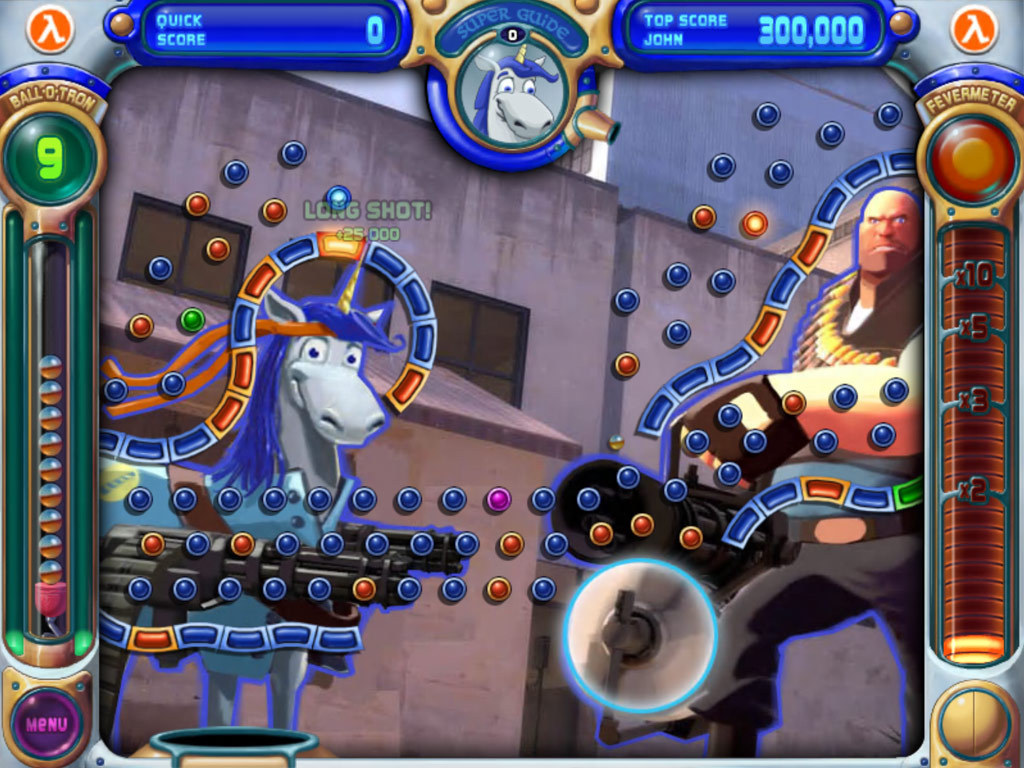
This game is 100% real. You can go download it on Steam right now. Released in 2007 to promote Valve’s The Orange Box, it is literally just Peggle stuffed with Valve game assets.
- The G-Man is in the sun, Bjorn has a headcrab strapped to his head, and Jimmy Lightning gets burned alive by the Pyro from TF2. It is completely unhinged.
- It features levels themed around Half-Life 2, the original Portal, and even a map modeled after Counter-Strike’s Dust.
- It is a 20-level free promo game that guarantees a few solid laughs.
Because of how bizarre it is, I am putting it above Chuzzle and below Insaniquarium.
Peggle Nights
This is the true sequel to the original Peggle, though it functions more like a massive level pack. It dives into the “dreams” of the Peggle masters—Bjorn dreams of being a superhero, and Jimmy Lightning dreams of being a scientist. It is just more Peggle, which is exactly what I wanted. It lands above Insaniquarium, below Bookworm.
Bejeweled Twist
We are nearing the end of the marathon, and unfortunately, this game is just bad. It is Bejeweled, but you rotate a 2×2 block of gems instead of swapping them.
- Unless you are a high-score chaser meticulously setting up massive board clears, there is zero actual challenge. You can just spin the blocks endlessly until a match accidentally happens.
- The best thing to come out of this game was the minigame it inspired in Plants vs. Zombies.
It isn’t aggressively terrible like Rocket Mania, nor is it a complete void like Hammer Heads. It just goes right above IgglePop.
Plants vs. Zombies
This is probably the main reason you clicked on this post. PopCap’s crown jewel. Where does it rank? The answer is easy: undisputed number one.
I am an absolutely massive fan of this game. I have 100% completed it across multiple platforms, played the browser demos in middle school computer labs, and burned countless hours on it during the pandemic.
Gameplay: You plant defensive flora on your lawn to stop waves of zombies from reaching your house. You have to manage sunlight economy, ability cooldowns, and board control.
Adventure mode: The game constantly shifts the environment to keep things fresh. Every ten levels, the combat zone changes:
- Daytime front yard
- Nighttime
- Backyard pool
- Foggy nighttime pool
- The roof
If the 50-level campaign isn’t enough, it features four massive extra modes packed with content.
Extra modes:
- Mini-games: Wild variations, like giving zombies plant heads. It also features heavy references to other PopCap titles, including Beghouled and Zombiquarium.
- Puzzle mode: Contains two main variants.
- Vasebreaker: You smash vases to release either plants or zombies, requiring rapid tactical thinking.
- I, Zombie: My absolute favorite. You play as the zombies, deploying them strategically to break through cardboard plant defenses on a tight budget.
- Survival mode: The ultimate test of the core mechanics. The Endless variant is a brutal, chaotic fight for survival against massive hordes.
- Zen Garden: A deeply relaxing mode where you grow plants to earn coins, featuring Stinky the Snail from Insaniquarium.
Why it is flawless:
- It overflows with passion, care, and genuine fun.
- It is the ultimate casual game because it is incredibly easy to learn but boasts a staggeringly high skill ceiling.
- You can play it totally casually, or you can dive deep into complex, highly optimized defensive formations.
- Music: Laura Shigihara delivered an absolute masterclass of a soundtrack. Tracks like Graze the Roof and Zombies on your Lawn are genuinely iconic.
- Upgrades: You can evolve your defenses with things like four-lane gatling peas and devastating corn cob missile launchers.
It is a true gaming marvel. Easy number one.
Bookworm Adventures: Volume 2
This is basically just a massive expansion pack for the first Bookworm Adventures. While Bejeweled 2 completely reinvented its predecessor, this one just gives you more of the exact same formula.
That isn’t a bad thing at all. It retains all the charm and fun of the original, with even more terrible dad jokes from Lex. I struggled with where to place this, but for the sake of consistency, I am putting it directly above the first game—they are essentially tied.
Zuma’s Revenge
One of the least interesting entries on the list, but not in a bad way. Just like Peggle Nights, it acts more like a massive expansion pack for the original game.
- It features a highly polished UI and a bit more visual flair.
- Because of the modern polish, it is slightly better than the original.
I am placing it a few spots above the original Zuma, right above the original Bejeweled.
Bejeweled 3
The final game on the list. It is, once again, just more Bejeweled, but polished to an absolute mirror shine. It is fun, packed with content, and highly refined.
However, it lacks the historical charm of the first game and the revolutionary leap of the second. Aside from running at higher resolutions and offering a few new modes, it doesn’t do much to stand out. It is an excellent game, but it lacks the unique magic of the top-tier titles. I am placing it below Atomica, right above Heavy Weapon.